The international conference and exhibition ReBuild Ukraine: Construction & Energy 2025, which took place on 13–14 November in Warsaw, was a significant platform for mobilising international support for Ukraine.
The event saw the participation of numerous government delegations, development institutions, donors, investors and businesses from over 30 countries, with a key focus on real investment decisions, critical infrastructure financing and practical reconstruction projects.
A total of EUR 722 million worth of agreements were announced and signed at the event. According to EU estimates, these agreements have the potential to mobilise up to EUR 2 billion in investment in the Ukrainian economy. Furthermore, Ukraine received EUR 75 million in grant support for the restoration of water supply and the development of social housing. The conference provided a valuable opportunity for developing business partnerships between the EU and Ukraine. In addition, it facilitated an assessment of Ukraine’s progress in integrating into the EU single market and reforming the business climate.
Andrii Borenkov, Head of Advisory at ReBuild Ukraine, stated that the event has evolved into a platform for communication between Ukrainian and international businesses, donors and government representatives, extending beyond the scope of a conventional exhibition. He also emphasised:
“The most significant challenge for businesses is securing adequate financing, as a substantial number of projects require financial backing and global investment. In my view, the latest event demonstrated that key players are well prepared for a qualitatively new level of interaction, but most are waiting for precedents for the implementation of higher-risk projects. Nevertheless, there are many signs that this point is approaching: we are seeing numerous new programmes from international donors, large grants to Ukrainian charitable foundations, and new rounds of investment funds focused on Ukraine. We therefore anticipate positive news next year and are preparing to provide maximum support to our clients and international donors and investors. We are committed to productive cooperation for the recovery of Ukraine.”
Програма ReBuild Ukraine була структурована навколо низки тематичних панелей, кожна з яких фокусувалася на ключових напрямах відбудови: енергетиці, водних ресурсах, муніципальних інфраструктурних проєктах, інвестиціях і фінансових інструментах. У дискусіях брали участь представники урядів, міжнародних фінансових інституцій, донорських організацій, муніципалітетів і приватного бізнесу. Представники BDO в Україні також відвідали конференцію та долучилися до обговорень інвестиційних стратегій. Така участь допомагає нам залишатися в центрі професійного діалогу про майбутнє української економіки та роль бізнесу у відбудові. Далі зупинимося детальніше на кількох із цих панелей.
-
Investment, financing and international partnerships
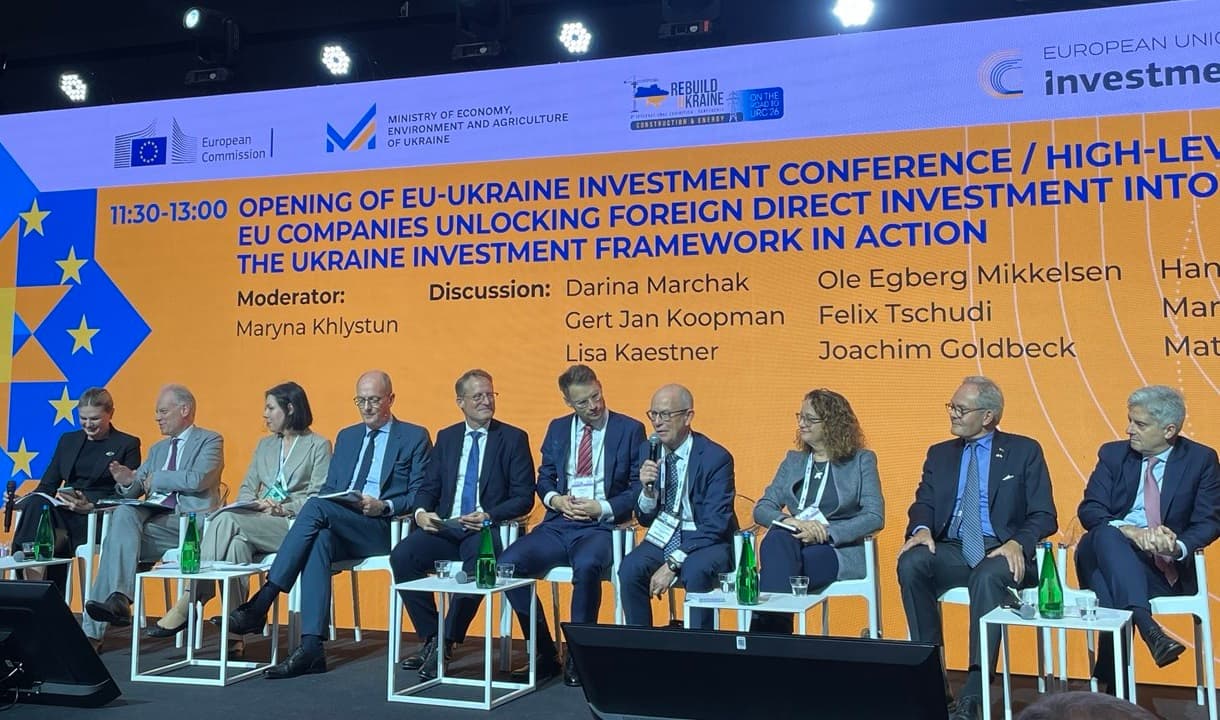
Taras Kachka, Deputy Prime Minister for European and Euro-Atlantic Integration, officially presented the first pavilion of the unified Ministry of Economy, Environment and Agriculture. The event was also attended by Deputy Ministers of Economy, Environment and Agriculture, Daria Marchak and Andrii Teliupa, as well as other representatives of the ministry, UkraineInvest, the State Property Fund of Ukraine, the Kyiv School of Economics, and the Public-Private Partnership Agency (PPP Agency).
“Each investment project constitutes a component of the broader economic transformation currently underway in Ukraine. We are grateful to the European Union and our business partners for collaborating on this modernisation project,” emphasised Taras Kachka in his speech.
This panel presented specific examples of the participation of international financial institutions (IFC, EBRD, EIB and others) in renewable energy, logistics and critical infrastructure projects. These projects were particularly focused on the Ukraine Investment Framework, the investment component of the EU’s Ukraine Facility programme. This highlighted the pivotal role of transparent rules, effective quality management and reliable auditing as essential prerequisites for the large-scale involvement of private and institutional capital in the reconstruction of Ukraine.
Representatives of the governments of Ukraine, Poland and Sweden, as well as international financial institutions, took part in the discussion. The speakers emphasised:
- progress in anti-corruption reforms
- development of military risk insurance instruments
- the use of EU mechanisms and export credit agencies to reduce investment risks and attract business to reconstruction projects.
Particular emphasis was placed on the role of frozen russian assets, flagship recovery funds, and the importance of modernising the Ukrainian economy, advancing technology, and creating green and inclusive infrastructure.
European Commissioner Marta Kos emphasized that Ukrainian innovations demonstrate extraordinary resilience and that partnerships with EU industry provide the scale, networks and capital for a lasting impact.
She added:
“It is impressive that Ukrainian engineers and entrepreneurs have been able to continue innovating in the face of war. EU funding is now available for manufacturers producing civilian goods with military applications, including drones. Ukraine’s military experience has equipped us with the expertise to expedite and optimise defence production, ensuring cost-effectiveness. This will make both Ukraine and Europe safer.”
As part of the Investment Strategies panel, our Managing Partner for Corporate Finance, Vitalii Strukov, emphasised:
“The establishment of a new infrastructure fund, Amber Dragon Ukraine Infrastructure Fund I (target size: EUR 350 million), is under discussion with the participation of Dragon Capital and Amber Fund Management Ltd, with a focus on green energy and logistics. There are plans to establish a joint investment fund involving the U.S. International Development Finance Corporation (DFC) and Ukraine in the critical materials sector, with an initial amount of USD 150 million (USD 75 million from each party). Ukraine is shifting from a position of reliance on external aid to that of a proactive partner, offering investors specific growth opportunities.”
-
Water, municipal infrastructure and social sustainability of municipalities
The primary objective of the water panel is twofold: firstly, to address the pressing need for the restoration of damaged facilities, and secondly, to formulate effective solutions for the modernisation and sustainable development of Ukraine’s water infrastructure, aligning it with European standards and current challenges. This involves transitioning to more environmentally friendly technologies, introducing transparent investment rules, improving water quality and environmental protection, and establishing long-term partnerships between municipalities, the state and international donors.
At the forum, it was announced that EUR 75 million would be allocated in grants for the restoration of water supply systems and the development of social rental housing. These funds will be directed towards the modernisation of networks and water treatment plants, the development of new water sources, and the implementation of energy-efficient solutions for utilities.
A separate part of the discussion was devoted to the presentation of systemic state initiatives in the field of water supply. In particular, the concept of the state social programme Sotsvoda was presented, which aims to:
- protect public health by ensuring access to high-quality drinking water in accordance with European standards
- integrate the principles of environmental protection, sustainable development and transparent procedures into all stages of water infrastructure modernisation.
The programme facilitates large-scale investments in infrastructure, encompassing:
- construction and reconstruction of tens of thousands of kilometres of water supply networks
- modernisation of drinking water treatment plants and water intake facilities
- drilling of new wells
- establishment of facilities for the production and use of liquid chlorine alternatives, and
- implementation of a network of state-of-the-art water quality control laboratories.
The planned results of the programme focus on:
- maximising access to high-quality and safe drinking water for the population
- fully centralising drinking water supply in rural areas
- reducing the use of hazardous reagents for water disinfection
- increasing the share of water sourced from underground supplies.
Funding for the programme is planned until 2035, with an indicative budget of UAH 350 billion, involving the state budget, local budgets and other sources, and coordinated by the Ministry for Development of Communities and Territories of Ukraine. Oleksandr Nikolayenko, Key Audit Partner, summarised:
"The provision of drinking water and municipal infrastructure is of paramount importance, not only in terms of physical infrastructure, but also regarding the safety and quality of life of millions of people. Large-scale investments in the restoration and modernisation of water infrastructure will only be effective if every hryvnia and every euro is accounted for transparently, and decisions are supported by high-quality auditing and control systems. This approach fosters trust among donors and investors, paving the way for the ambitious goals of programmes such as Sotsvoda to be achieved by 2035"
-
Strengthening Ukraine’s energy sector
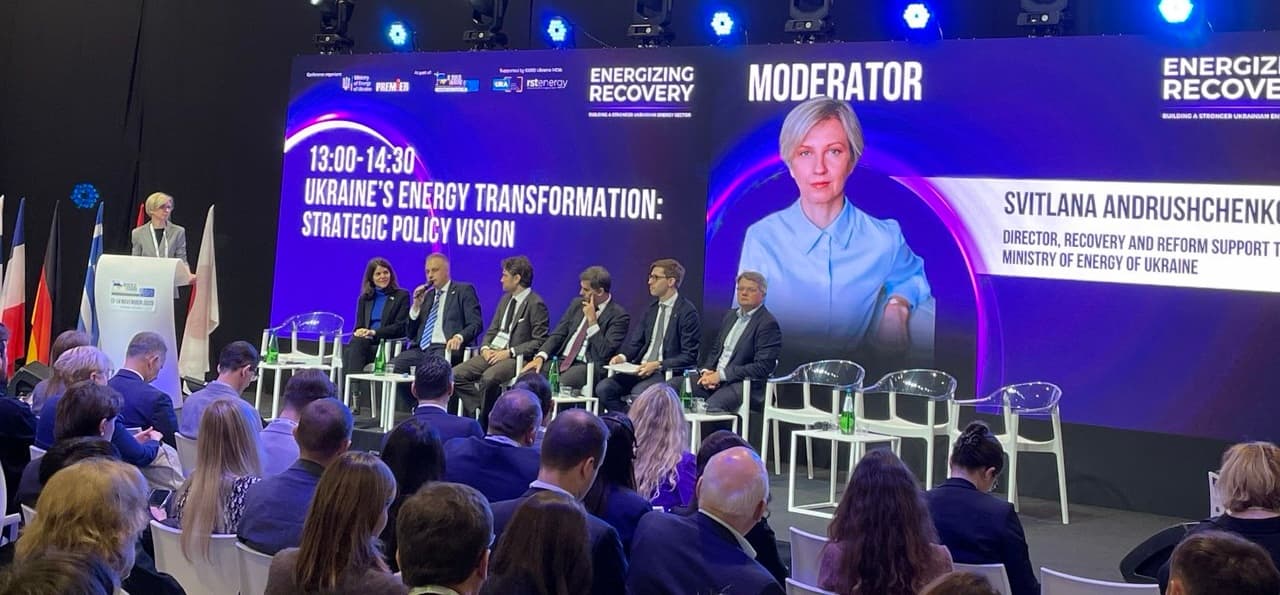
At the ReBuild Ukraine 2025 energy panel, participants emphasised that the energy sector is both a key battlefield and the foundation for Ukraine’s sustainable recovery. The following priorities were identified: an energy system synchronised with the EU, further market coupling to reduce electricity costs, deep reforms of the gas market, and the implementation of an agreed roadmap for renewable energy. The necessity for robust institutions and an autonomous regulator that adheres to European regulations and mitigates risk for investors was also underscored.
Representatives of the UNDP outlined the support already provided to the Ukrainian energy system, including reserve capacity of over 500 MW, network reinforcement and investments in decentralised solar generation. These measures not only address the urgent challenges of the heating season but also promote the green transition.
The speakers concurred that the technology and financial resources necessary for transforming the energy sector are available, and that the primary task is to reduce military and regulatory risks and to unlock business potential through transparent rules and good governance.
-
Solar energy and energy storage systems
- legislative framework and prospects for the development of solar energy and energy storage in Ukraine
- current market situation and investment opportunities for SES and ESS projects
- BESS: profitability, efficiency, sustainable development — how energy storage is changing market logic
- financial and technical solutions that make the construction of modern solar stations affordable and competitive.
Serhii Shtantsel, Key Audit Partner and Deputy Director of BDO in Ukraine, participated in this panel. He emphasises the necessity of paying close attention not only to individual projects, but also to the integration of solar energy and energy storage into the broader architecture of the energy system and market..
“Solar energy and storage systems are no longer about a distant ‘green future’; they are about very practical solutions for Ukraine’s energy security here and now. As a business and as consultants, our role is to facilitate the transformation of investment interest into tangible projects that not only generate profit but also contribute to strengthening the energy system and adherence to the principles of sustainable development.”
-
Communities: investments and partnerships
A key platform for this was the National Pavilion “Ukraine and Its Communities”, which showcased local energy sources alongside international opportunities. It was here that Ukrainian communities — best placed to understand the needs of their people — presented their ideas and projects on the global stage. The pavilion featured 19 communities, each highlighting its distinct experience and vision for development. Throughout the day, presentations and discussions took place, and partners and investors were sought — processes that help transform ideas into concrete steps toward reconstruction.
This event was part of a broader initiative: ReBuild Ukraine brought together representatives from more than 100 communities seeking new solutions, knowledge, and partnerships. At BDO, we are pleased to see such active engagement, as we have been supporting these communities for many years in key areas — independent auditing, building financial transparency, implementing automated processes, and improving management efficiency. It is especially important to us that communities have the opportunity to present themselves on the international stage.
-
The role of business in reconstruction
• іinvesting in reconstruction and modernisation projects, bringing not only capital but also managerial expertise
• creating jobs and developing human capital, providing employment in frontline and affected regions
• acting as a partner to the state and international donors, delivering infrastructure, energy, and industrial projects through public–private partnerships
• introducing innovation, digital, and green solutions that enhance the efficiency and sustainability of the economy
• fostering a culture of transparency and accountability by adopting international reporting standards, compliance practices, and ESG approaches.
Andrii Borenkov noted that further positive decisions are expected next year and reaffirmed the company’s commitment to providing comprehensive support to its clients, as well as to international donors and investors, in implementing joint projects for Ukraine’s reconstruction.
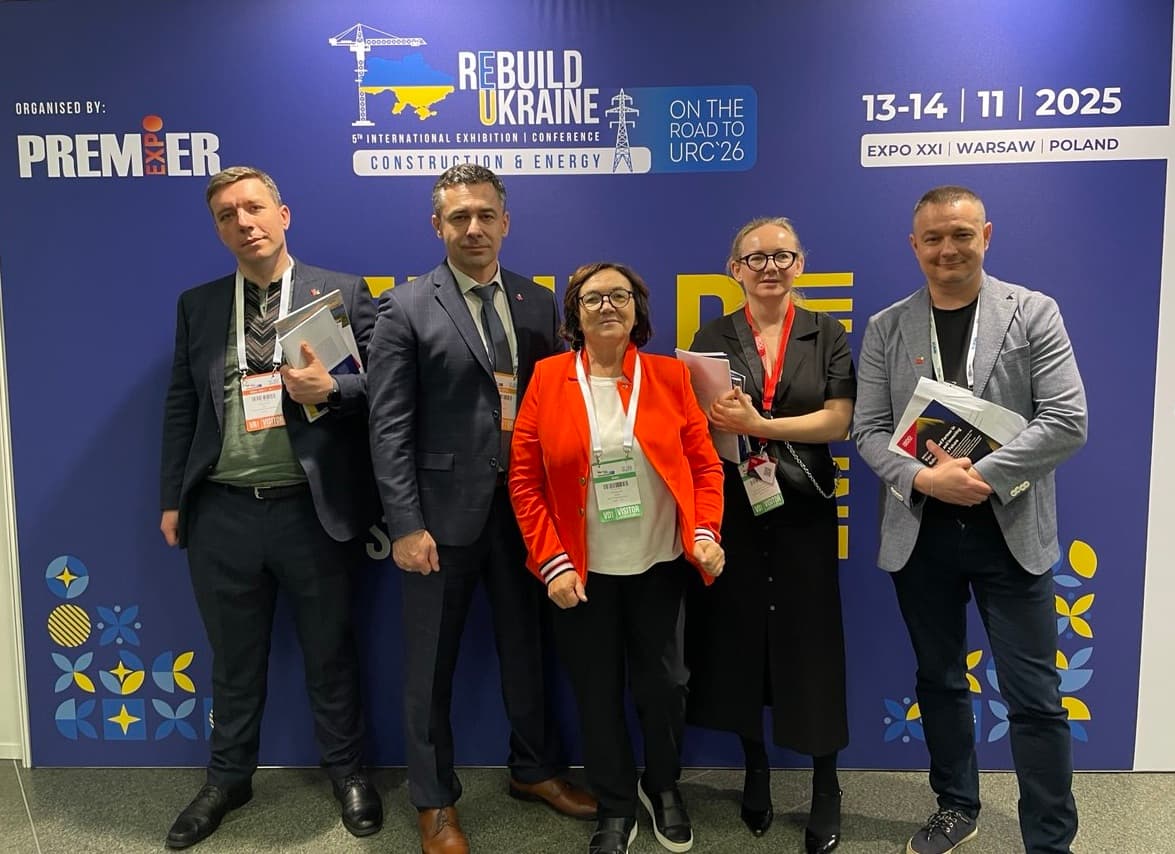
For BDO in Ukraine, this means responding to growing business demand for transparent audits, high-quality financial reporting, asset valuation, financial modelling, and consulting that help transform investors’ and donors’ intentions into real, viable reconstruction projects.
The BDO team is ready to provide expert support in implementing your plans and projects.
Subscribe to BDO in Ukraine Newsletters
Subscribe