
Attracting funding from donors and international financial institutions

In today’s global environment, businesses and non-profit organisations seeking growth, development of innovative projects or scaling up of social initiatives are increasingly looking for opportunities to raise funds from international donors and financial institutions. Ukraine’s candidacy for European Union membership has led to a substantial increase in access to international grants, loan programmes and foreign direct investment for Ukrainian residents.


It is critical to understand the requirements, standards and procedures for grant funding or lending in international programmes to make successful selections and conclude agreements. Our relevant expertise enables us to meticulously design projects tailored to the specific requirements of diverse donors and financial institutions. We provide businesses with the essential resources to achieve their objectives.


Our approach 

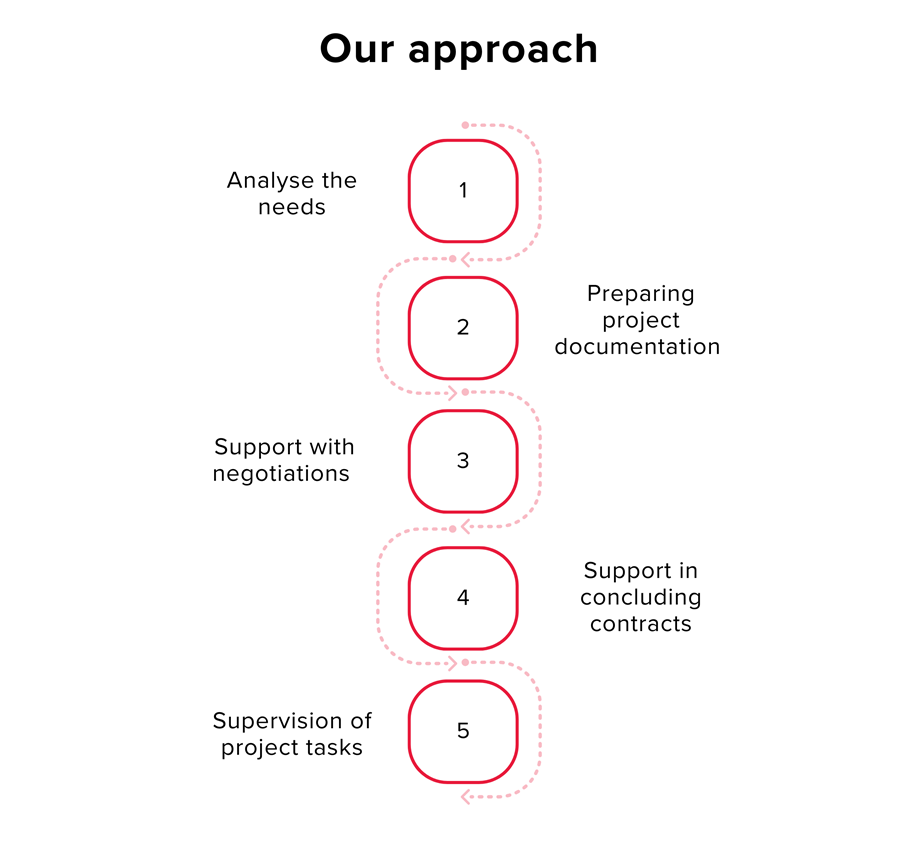
We provide comprehensive support at every stage of the process of attracting international financing. First, we analyse the needs, potential sources of financing and available grant or loan programmes to determine the optimal format for project implementation. The next step involves preparing project documentation in accordance with international standards, including developing business plans, feasibility studies, financial models and additional materials that reflect the economic and social value of the project or initiative. Furthermore, we provide support with negotiations with international financial institutions, helping to ensure transparency and accountability. Our experts are involved in contract negotiations, monitor project tasks during implementation and respond quickly to potential risks or changes in financing conditions.

Our approach

BDO in Ukraine provides comprehensive support at every stage of the process of attracting international financing:

  • Assessment of financing opportunities

We analyse the company’s goals and the specifics of the project and select relevant donor support programmes and financial institutions (Donor funding, EBRD, IFC, EIB, etc.).

  • Documentation preparation

We develop business plans, financial models, grant applications, proposals for investors, and feasibility studies that meet international standards and requirements of donors or international financial institutions.

  • Project management and consulting

We coordinate work, develop roadmaps to meet donor deadlines and requirements, support negotiations, and help build partnerships with international financial institutions.

  • Control and reporting

We provide support in preparing regular reports, auditing the use of funds, meeting compliance rules, ensuring transparency and adherence to financing conditions.


Results and benefits for clients

Working with our experts helps businesses and non-profit organisations simplify the process of getting international funding, reduce operational risks, and speed up the implementation of strategic initiatives. Thorough preparation of documentation and compliance with global requirements increase the chances of successful competitive selection, while our advice and support remove administrative and bureaucratic barriers. As a result, you gain additional resources for development, strengthen your competitiveness and become a reliable partner for future investments or donor programmes.


Why BDO in Ukraine?

Our experts have a deep understanding of the requirements of international institutions such as the IFC, the World Bank, and the EBRD, as well as knowledge of local realities.

We assist with:

  • Obtain financing for your business through government programmes, loans or grants.
  • Prepare investment proposals for foreign partners.
  • Ensure that projects comply with ESG standards and donor requirements.
  • Optimise the application and reporting process.


With many years of experience in international finance, audit and consulting, BDO in Ukraine can support your business in implementing initiatives of any complexity, from attracting investment to scaling social initiatives. We offer comprehensive support at every stage, from document preparation to sourcing investors.

Key Contact

Andrii Borenkov

Andrii Borenkov, CFA

Partner, Head of Advisory

View bio
  • What types of international funding are available to businesses, non-profit organisations and communities?

Grants, IFI loan programmes, technical assistance, investment funds, development programmes from foreign governments, and foreign direct investment for commercial and social projects are available.

  • How does grant funding differ from investment or loans?

A grant is non-repayable but has clear requirements and criteria. Foreign investment involves the investor's participation in the business or profits. IFI loans are concessional financing for large-scale and developing projects.

  • What documents are the most often required by international donors and financial organisations?

A business plan, financial model, feasibility studies, project description with expected results, budget, risks, ESG component, transparency and compliance policies.

  • Is special training required to apply for a grant or an investment?

Yes. It is necessary to prepare a structured package of documents that meets international standards — from financial calculations to a description of the project's impact. Non-compliance with the format is a typical reason for rejection.

  • Which projects have the best chance of getting grant funding?

Projects with a clear economic, social, innovative or environmental impact: modernisation, small and medium-sized business (SMB) development, digital solutions, infrastructure, energy efficiency, municipalities recovery and ESG initiatives.

  • Can small businesses apply on their own?

Yes, but many companies seek support to ensure the documentation is prepared correctly, the budget is well-structured, and all donor or international financial institution requirements are met.

  • How long does it take to prepare high-quality project documentation?

On average, the process takes from 2 to 6 weeks. The duration depends on the program’s requirements, the project’s complexity and the amount of analyses needed (financial models, feasibility studies, ESG components).

  • Does BDO provide support in negotiations with international institutions and investors?

Yes. We prepare companies for negotiations, support communication and help ensure transparency, reasonableness and compliance with donor and investor requirements.

  • What are the most common reporting requirements set by international donors?

Regular financial reports, confirmation of the funds’ use, audits, project implementation monitoring, compliance with ESG standards and transparency policies.

  • Why should you engage consultants to work with international donors and investors?

This minimises errors, speeds up the process, increases the chances of funding and ensures compliance with the complex technical and legal requirements of international programmes.

Grant Funding — funds provided on a non-repayable basis for the implementation of social, innovative, infrastructure or business projects.

International Financial Institutionstions (IFIs) — institutions that provide grants, loans or investments: EBRD, IFC, World Bank, European Investment Bank

Donor Program — a support mechanism used by donors to fund development or rehabilitation projects.

Project Roadmap — a step-by-step action plan with deadlines and responsible parties for effective project implementation.

Project Documentation Development — a comprehensive process of creating business plans, financial models, feasibility studies, grant applications, investment proposals and supporting documents.

Investment proposal — a structured package of materials for international investors: business description, financial forecasts, risks, investment needs, development strategy.

Business Plan — a document that describes the business model, team, market, product, financial forecasts and implementation plan.

Financial Model — a tool for calculating future cash flows, assessing investment efficiency and forecasting expenses and income.

Feasibility Study (FS) — an analytical document that proves the viability and economic feasibility of a project.

Foreign Direct Investment (FDI) — a system of criteria used to assess the environmental impact, social responsibility and quality of corporate governance of foreign investors who invest in projects or companies with the aim of acquiring ownership or management interests.

ESG (Environmental, Social, Governance) — a system of criteria used to assess environmental impact, social responsibility and the quality of corporate governance.

Compliance — adherence to policies, rules and procedures established by international financial institutions and donors.

Funds Audit — checking process designed to ensure that grant or investment resources are being used correctly, transparently, and in line with the intended purpose.

  • The project does not meet the requirements of the grant programme or investor.

Applicants often submit a ‘universal’ project that does not take into account the specific conditions of the donor programme or investment fund. International donors expect clear alignment with programme objectives, impact criteria and ESG requirements.

  • Weak or incomplete project documentation package.

Common problems: lack of a financial model, unclear budget, lack of logical structure of results, insufficient justification of social or economic impact. This is a critical mistake for competitions.

  • Unsystematic or inflated budget.

Budgets that are not backed up by real data or do not take into account hidden costs immediately undermine confidence in the project and reduce the chances of obtaining grant funding or investment.

  • Insufficient attention to risks and risk management mechanisms.

Donors and investors expect a clear list of risks: financial, operational, geopolitical, technical. Applicants often ignore this part or describe it superficially.

  • Lack of ESG logic in the project.

International funding is increasingly focused on environmental, social and governance impact. Projects without ESG justification receive lower ratings. 

International financing is increasingly focused on environmental, social, and governance impact. Projects without ESG justification receive lower evaluations.

  • Weak internal management capacity.

The presence of a team, procedures, compliance and transparency systems affect the assessment of an organisation's reliability. IFIs and donors often reject applicants due to low institutional readiness.

  • Insufficient research of the market or economic environment.

Projects without clear market analysis, competitive environment or demand forecasts are considered low-risk only in theory — but not in practice.

  • Unrealistic project implementation deadlines.

Grant competitions and investors do not support projects with unrealistic roadmaps, overly ambitious deadlines, or imbalanced resources.

  • Ignoring transparency and reporting requirements.

International donors require clear control mechanisms and regular reporting. Failure to incorporate these elements in the project application creates the impression of an unreliable partner. 

  • Attempting to use the same set of documents for different donors.

Each donor programme has its own formats, priorities and evaluation criteria. A ‘standard application’ almost always reduces the chances of success. 

  • Lack of a clear investment narrative.

It is important for investors to see the logic of business growth, exit strategy, scaling potential and financial multipliers. These elements are often presented in a fragmented manner.

  • Insufficient preparation for negotiations with international financial organisations.

Typical mistakes: lack of answers to technical questions, inconsistency in the team's positions, unclear arguments regarding the need for financing.