
Valuation for Financial Statements

The valuation of assets for financial reporting is a critical area that ensures the accurate reflection of an entity’s carrying amount in its financial statements. Proper valuation of assets fosters business transparency, increases investor confidence, and ensures compliance with international and national standards.


Main stages of BDO in Ukraine’s valuation process:
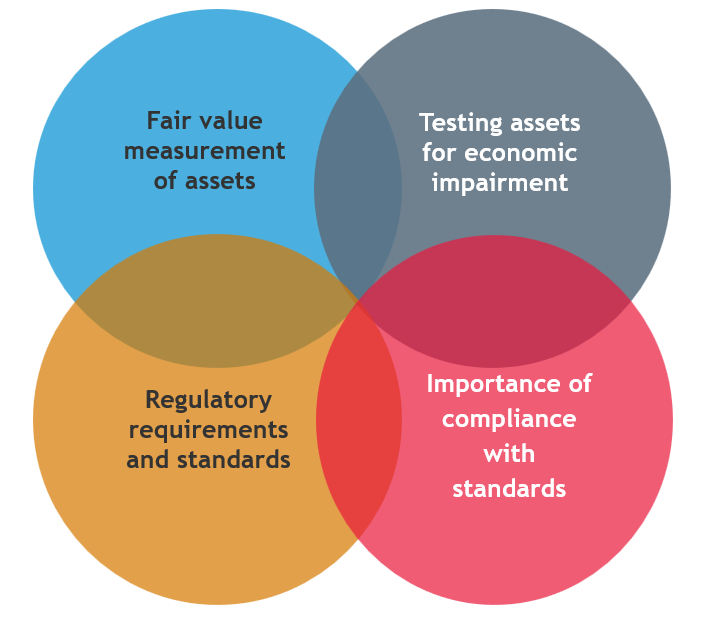
Valuation of Assets

1. Fair value measurement of assets

Fair value is defined as the price that would be received to sell an asset or paid to transfer a liability in an orderly transaction in the principal or most advantageous market.

Valuation methods:

  • Comparative approach: Based on the analysis of market data on current and non-current assets.
  • Income approach: Involves valuation based on future cash flows adjusted to present value.
  • Cost approach: Factors in the cost of restoring or replacing the asset, including depreciation.


It is used to value assets such as property, plant and equipment, investment property, intangible assets, and financial instruments.


2. Testing assets for economic impairment

The objective of the test is to determine whether the value of an asset has decreased to the extent that it exceeds its estimated recoverable amount.

The impairment test is conducted in the following steps:

1. Identifying impairment signs:

  • External factors: changes in market conditions, technological developments, economic downturn.
  • Internal factors: decrease in the volume of use of the asset, liquidation plan.

2. Estimating the recoverable amount:

The higher of the following values is chosen:

  • Net selling price of the asset (market value less costs to sell).
  • Value in use (present value of expected cash flows from use of the asset).

3. Recognition of an impairment loss if the carrying amount (of property, plant and equipment or other assets) exceeds its recoverable amount.

Relevant for assets such as intangible assets with indefinite useful life, property, plant and equipment, investments in subsidiaries or associates.


3. Regulatory requirements and standards

To evaluate assets, companies are guided by International Financial Reporting Standards (IFRS) and National Accounting Standards of Ukraine (NAS):

  • IFRS 13 Fair Value Measurement regulates the measurement of fair value (of assets).
  • IAS 36 Impairment of Assets describes the procedures for impairment testing.
  • In the context of Ukrainian legislation, National Accounting Standards of Ukraine are applied to regulate the accounting for property, plant and equipment, intangible assets, and the recognition of the residual value and cost of assets.


4. Practical significance

Importance of compliance with standards

Compliance with international standards, such as IAS, IFRS 13, and national requirements, contributes to the correct reflection of the carrying value of assets and maintains a stable financial position of an entity. Correct valuation of assets also ensures:

  • Minimization of errors in tax reporting
  • Meeting the expectations of stakeholders
  • Improving the entity’s competitiveness.


Asset valuation is a reliable tool for improving the analysis of an entity’s financial condition and making management decisions based on accurate indicators.

Only experienced professionals should be relied upon to perform financial valuation of assets for financial reporting purposes. Contact experts of BDO in Ukraine, and we guarantee accuracy, transparency, and compliance with international standards.


Key Contacts

Valeriy Afanasyev

Valeriy Afanasyev

Valuation Partner
View bio
Dmytro Korol

Dmytro Korol

Head of Business Valuation and Financial Modeling
View bio
  • What is the valuation of assets for financial reporting?

It is a set of procedures aimed at determining the fair and objective value of assets for their proper presentation in the financial statements in accordance with international and national standards.

  • Which assets are most commonly subject to valuation?

Valuation is applicable to PPEs, real estate, intangible assets, financial instruments, as well as assets that are at risk of impairment.

  • What methods are used in valuation?

Three main approaches are applied: market, income and cost. The choice depends on the characteristics of the asset, availability of market information, and the purpose of the valuation.

  • When should an impairment test be performed?

The test is performed when there are external or internal indicators of possible decline in asset value, such as changes in market conditions, technological developments or significant reduction in use.

IFRS establish the principles of fair value measurement and the procedures for impairment testing, ensuring transparency and comparability of financial information on the global level.

  • What is the recoverable amount of an asset?

It is the higher of two values: fair value less costs to sell, or its value in use, calculated based on discounted future cash flows.

  • Why should companies conduct professional valuation of assets?

Accurate valuation of assets minimises risks of errors in financial and tax data, enhances investor confidence, supports precise financial analysis and enables informed management decisions.

  • How often should valuation of assets be updated?

Frequency depends on the nature of the asset and applicable standards. For certain categories, valuation is performed annually, especially where there is a high risk of impairment.

Value in Use — the present value of future cash flows expected from the use of an asset. 

Cost Approach — a valuation method based on the reproduction or replacement cost of an asset, adjusted for depreciation.

Replacement Cost — the cost of creating or acquiring a similar asset under current conditions and technologies.

Asset Impairment — a reduction in asset value when its carrying amount exceeds the recoverable amount.

International Financial Reporting Standards (IFRS Accounting Standards) — the system of principles regulating the measurement and presentation of assets in financial statements.

Intangible Assets — assets without physical form but with economic value, such as patents or trademarks.

Carrying Amount — the value of an asset recorded in the financial statements at a specific date.

Market Approach — a valuation method based on the analysis of market data on similar assets.

Fair Value — the price that would be received to sell an asset in an orderly transaction between market participants.

Impairment Test — a procedure to determine whether an asset’s carrying amount exceeds its recoverable amount.